Putnam United
About the Project
What we know about Project Avalon, the proposed Buffalo hyperscale data center, and the questions that remain.
Jump to a section
Understanding size
A project measured in acres, megawatts, and miles.
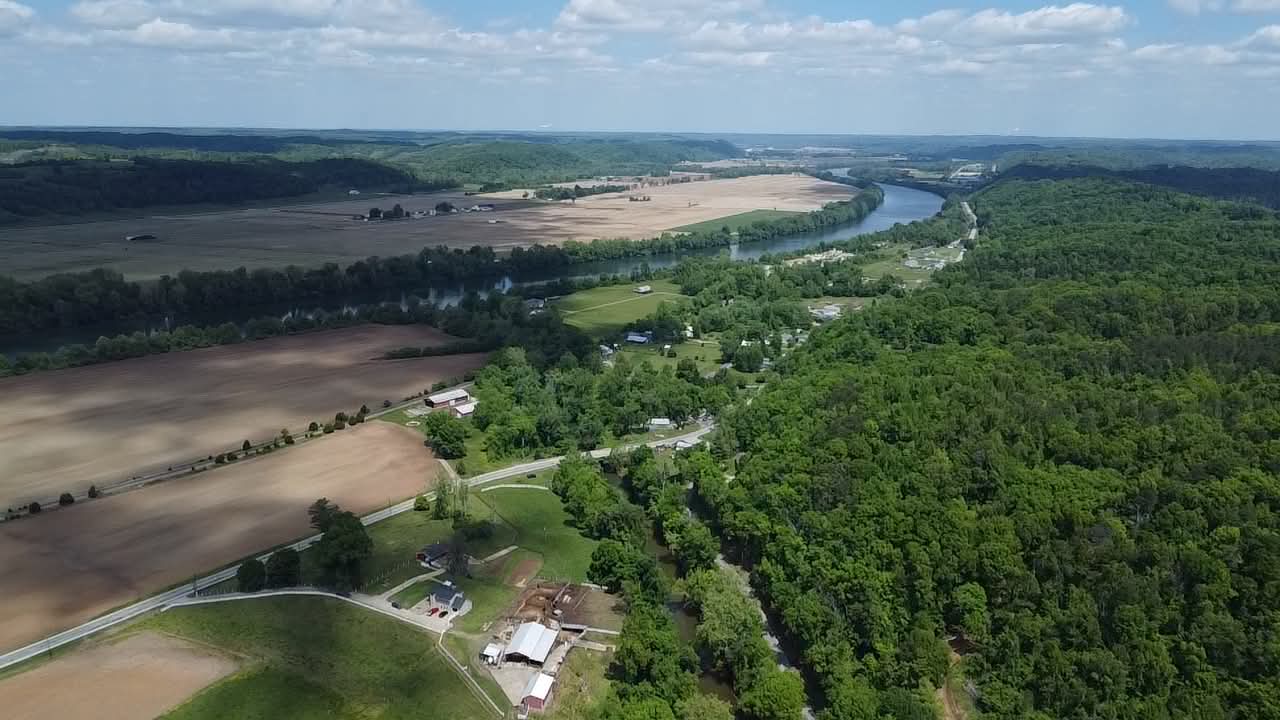
Google has purchased a roughly 1,700 acre parcel of land. That’s more than two and a half square miles.
According to state lawmakers, a facility that requires 90 MW of power qualifies as a “hyperscale data center”. While the size of this particular project hasn’t been disclosed in terms of energy usage, we know that it meets the definition and has been approved by the newly established West Virginia Data Economy Office. So at the very least, it will demand the same amount of power as 75,000 homes.
As a point of reference, the Mingo and Tucker County data center proposals are for about 2.5 Gigawatts each. And the Monarch data center campus in Mason County– a full 25 miles from the Buffalo site– is for an 8 Gigawatt facility. The Mason County site alone is enough power to run six million homes. In all of West Virginia, there are only 870,000 homes, so the Mason County facility– again, just 25 miles from Buffalo– will need 600 times more power than West Virginia households currently consume, combined. The collective geographic footprint of the Mason and Putnam County sites is bigger than the city of Nitro.
What else do we know?
Historically, big tech companies have used code names to keep large projects secret while they progress development. Some even establish shell companies to conceal details and misdirect the public. Google is operating through their affiliate organization, Cumulus Group LLC, and has named their proposed Buffalo campus “Project Avalon”.
The land was purchased from AEP. With Project Avalon, AEP stands to gain a single customer whose energy consumption will rival that of an entire city, perhaps more. And while we do know that Google plans to be grid-tied (AEP lists the project on their 5 year roadmap), we don’t have details on how AEP intends to meet the demand. Google’s latest permit applications do show a new transmission line crossing the river and cutting straight through some of the state’s most productive and historical farmland.
Based on what we’ve seen so far, the facility will consist of eight buildings, to be constructed in phases over the course of several years, eventually sprawling to occupy about 1,250 acres. The most detailed information we have comes from Google’s permit applications to the Army Corps of Engineers where their plan to dump dredged and fill materials into local waters is laid out.
Water and ecology
Water, ecology, and infrastructure.
Some of the property is in the 100 year floodplain where development is heavily federally regulated. That’s not where Google plans to build. They plan to develop land on the other side of the tracks, primarily forested hillside that will need to be entirely clearcut and reshaped into flat land. The whole area is riddled with important streams and wetlands.
The site will encompass around 11,000 feet of eighteen mile creek (a rare gem for generations of local fisherman) and a similar amount of the lower Kanawha River– which actually under represents the 45,000 total feet of streams and wetlands that will be impacted by the thousands of cubic yards of dredged and fill material they mean to dump. Imagine 500 large dump trucks of fill dirt being dropped into a small stream. It’s enough dirt to cover an entire football field a foot and a half deep.
Those waterways and wetlands have been flagged as potential habitat for 9 endangered and threatened species, including:
- Indiana Bat
- Northern Long-Eared Bat
- Pink Mucket Pearly Mussel
- Sheepnose Mussel
- Snuffbox Mussel
- Spectaclecase Mussel
- Monarch Butterfly
- Salamander Mussel
- Tricolored Bat
Mike Tony of the Gazette Mail and Herald Dispatch does a great job of detailing some of these known environmental risks here.
In addition to the 8 data center buildings, they plan to construct 14 miles of internal roadway, stormwater management facilities, a wastewater treatment plant, and utilities related infrastructure such as substations.
History and farmland
What about historical and archeological sites?
Glad you asked.
The Buffalo Indian Village, known to house at least 500 Shawnee burial sites and at least two different ancient villages, is just a couple miles away. It’s one of at least 4 properties that are on or qualify to be on the National Register of Historic places and that are within the soundscape or viewshed of the data center property. Other sites include the Buffalo Town Square and General McCausland’s farm, which sits directly across the river in Pliny. The site also borders Atkinson’s Gate, the only Civil War Battlefield in Putnam County.
The area is also home to some of the state’s premier farmland. And since data centers tend to come in clusters (there’s rarely just one), the threat of diminishing agricultural land is real. Approximately 67% of planned data centers are in rural areas like ours and farmers across the country are worried. The Wall Street Journal writes more about that here.
Google’s claim versus reality
Google’s Claim Versus Reality
Now that Google has launched a web site about their proposed Project Avalon (mind you, they don’t call it that on the site), it’s important for each of us to assess what the information presented actually means, doesn’t mean, or leaves unclear. Please take the time to do your own research. Here’s our initial take…
Opening Salvo
What it says
The fluffy opener acknowledges Buffalo’s historic past and claims they “look forward to working with the West Virginia State Historic Office.”
What it means
Because several historic sites are within range of the site, Section 106, the federal code regulating the protection of National Historic Sites, has been enacted. It involves assessment of the project’s impact to these properties and facilitates negotiation among stakeholders about how best to mitigate those impacts. It’s a federally regulated process. Not quite a proactive effort by Google to protect our history.
And the jobs?
What it says
The site admits that “the onsite workforce is specialized” then pivots to touting the ancillary jobs created in other supporting sectors. They claim that “similar sites” support “hundreds” of permanent roles.
What it means
The workforce could be made up largely of remote workers from other states. The ancillary jobs could be mostly temporary. But, honestly, most of it is a mystery. The number of permanent jobs remains a question mark. because A) Google is building the plane while flying it and doesn’t actually know how many there will be or B) Google doesn’t want us to know because it’s an unimpressive number.
If we use 400 as a point of comparison, since that number has been thrown around in passing by some of our officials, Toyota provides around 3,000 permanent jobs. Their site only occupies 267 acres. It’s 84% smaller and provides 87% more jobs. And they told us about those jobs right out the gate. Why can’t Google?
Energy Affordability
What it says
“Data centers can help put downward pressure on utility rates by spreading fixed costs across more energy usage, helping reduce costs for all users”
What it means
Seriously? When was the last time your electricity bill went down? Just because it “can” in theory doesn’t mean that it will in reality. And there are mountains of evidence proving that data centers drive the cost of energy up. You can read all about it here, here, and here.
The short version is that the rate increases are astronomical and we’re already feeling them thanks to Data Center Alley in Virginia (because we share our power grid with them). It’s going to get a lot worse across all of PJM thanks to this data centers and all others like it.
Think of it this way. Electricity bills are made up of a number of line items including transmission, distribution, energy, and ancillary costs. For residential users, the cost of the energy itself makes up about 70% of the bill. And that price is simply driven by supply and demand. Demand goes up, (and by the way– our grid is not built to meet the increased demand that data centers are driving) prices will follow. It’s that simple.
What it says
Google touts their commitment to covering the cost of “all necessary electrical infrastructure.”
What it means
It’s kind of like building a house and expecting everyone else in the neighborhood to be grateful that they didn’t have to pay to have your driveway paved. It’s your driveway! No one else benefits from it. Of course you’re expected to cover that cost. Why shouldn’t the wealthiest company on the planet be held to the same standard? Why are we acting like this is some achievement to be proud of?
Responsible Water
What it says
“At each data center campus, our cooling decisions consider the local environment– balancing affordable energy and responsibly-sourced water.”
What it means
Well, not much. It doesn’t actually tell us anything about their methodology, how they define “responsibly-sourced water” or what they plan for the Buffalo facility specifically.
What it says
“We aim to replenish 120% more fresh water than we consume, on average, across our data centers and offices by 2030.”
What it means
Well, for starters, phrases like “we aim to” and “on average” don’t inspire much confidence. But more importantly, this Google-wide effort does not in any way address concerns about local water usage. Obviously they aren’t defying the laws of science. The Kanawha River and 18 Mile Creek aren’t going to flow with 20% more water than is currently within their banks. What it likely means is that they’re supporting projects like wastewater infrastructure improvement, smart irrigation, and wetland reclamation– in places across the country. Commendable, sure. But not helpful to the people of Buffalo.
Noise and Light Pollution
What it says
Absolutely nothing.
What it means
These are two of the most commonly cited concerns from members of the community, yet neither are currently addressed on Google’s web site.
Stay informed
Questions remain. Keep looking.
Please use our contact form to sign up for updates and news. For all other inquiries, please email info@putnamwvunited.com.
 Putnam United